Be a Blog Subscriber
Join thousands of manufacturing leaders and professionals who get the Accelerate blog delivered straight to their inbox



Join thousands of manufacturing leaders and professionals who get the Accelerate blog delivered straight to their inbox


Discover how Ohio is strengthening its manufacturing workforce through industry partnerships, aligned training, early career awareness and expanded pathways to skilled careers.
Read More
Tooling U-SME helps workers’ compensation insurance providers train sales and underwriting teams to understand manufacturing operations, support safer client practices, and improve long-term insurance outcomes.
Read More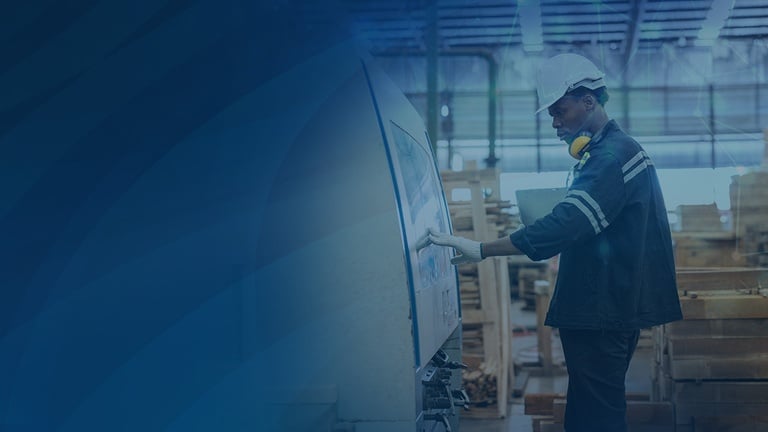

Tariffs are reshaping where manufacturers produce, invest, and build talent. As reshoring accelerates, companies need agile workforce strategies, automation-ready skills, and scalable training to support domestic growth and evolving workforce needs through 2027.
Read More
Leaders from the Charles L. Shor Foundation, Ludlow High School, and the Northern Kentucky Chamber of Commerce shared how philanthropic investment and employer engagement are creating a stronger, better-prepared candidate pipeline through an SME PRIME program in Northern Kentucky at SME FUSION.
Read More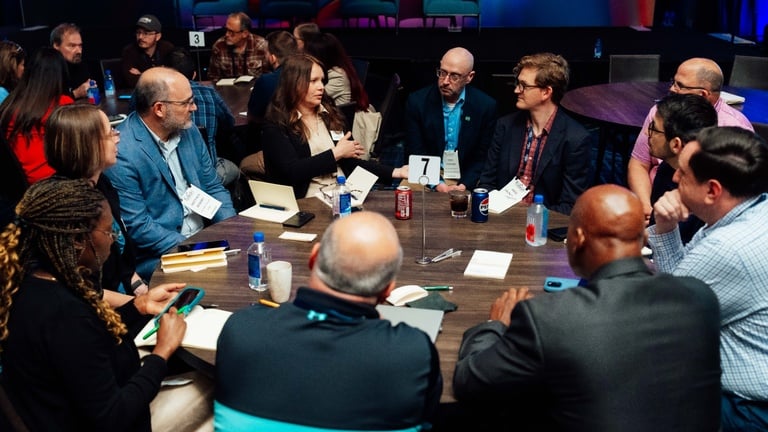
How can we develop strong front-line leaders without disrupting production? A recent session with Toyota Material Handling North America explored an approach combining training, advanced planning, continuous improvement, and follow-ups to help leaders apply new skills on the job.
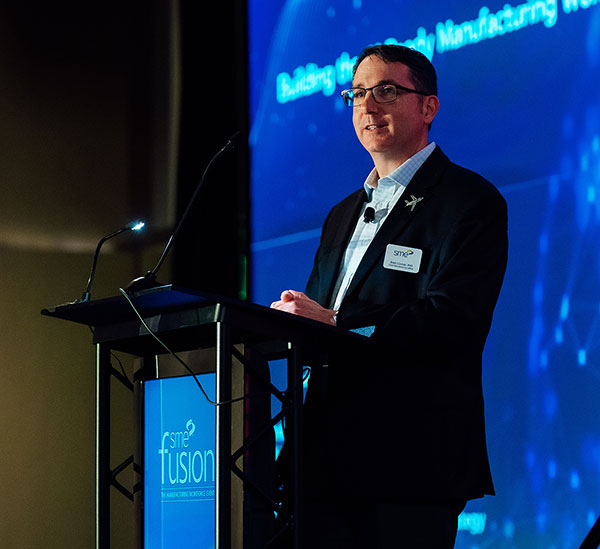
Read MoreAt SME FUSION, our message to manufacturing leaders at our Building the AI-Ready Manufacturing Workforce session was clear: AI readiness is now a business and workforce imperative. As artificial intelligence reshapes skills, responsibilities, and decision-making across manufacturing, organizations must prepare technology and talent as one integrated strategy. Aligning education, training, workforce development, and industry needs will determine whether employees, and the operations they support, can perform effectively in increasingly AI-enabled environments.
Timothy Wilson, PhD, Director of Technology Innovation & Strategy, SME
Dr. Brett Conner, Chief Manufacturing Officer, SME
Recent developments make one point increasingly clear: AI adoption is accelerating across manufacturing and is becoming part of core operational and business processes.
In manufacturing, AI increasingly intersects with smart manufacturing, Industry 4.0, digital twins, robotics, automation, additive manufacturing, and other digital technologies. The important workforce question is not simply which technologies manufacturers will deploy, but how those technologies will change tasks, decisions, responsibilities, and the skills employees need.
AI is already being deployed across a range of manufacturing applications, including predictive and preventive maintenance, inventory optimization, quality inspection, process monitoring, and production planning.
At the same time, several emerging capabilities are expanding what AI can do and creating new workforce implications:
As these technologies become more deeply embedded across manufacturing operations, their impact extends beyond individual tools or use cases. Collectively, they are contributing to a more connected operating environment in which data, human expertise, and AI-enabled systems increasingly work together. This broader shift provides the foundation for what we describe as cognitive manufacturing.
For this discussion, we use the term cognitive manufacturing to describe a connected manufacturing environment in which operational data, human expertise, and AI-enabled systems work together across the factory and enterprise to improve decisions, performance, and adaptability.
This can be viewed through three interconnected capabilities:
Together, these capabilities can support applications such as predictive maintenance, production optimization, quality improvement, and frontline decision support.
Cognitive manufacturing depends on trusted, governed, and accessible data, but its success also depends on workforce readiness.1 As employees increasingly interact with AI-generated insights, recommendations, and automated actions, they will need to understand not only their individual role or machine, but also how their work connects to broader manufacturing systems.

This creates a need for stronger capabilities in data literacy, systems thinking, technical judgment, and human-AI collaboration. The workforce of the future will need both technical proficiency and the ability to interpret information and make effective decisions across increasingly connected manufacturing environments.
We believe that AI should be viewed first as a workforce augmentation technology rather than simply as a replacement technology.
The precise effect of AI on manufacturing employment will vary by occupation, technology, implementation strategy, and business environment. However, organizations that successfully combine human expertise with AI-enabled tools may increase productivity, address workforce shortages, preserve institutional knowledge, and create new types of technical and operational roles.
We see several areas where AI could have a particularly significant impact.
Role-specific AI copilots can provide operators, technicians, engineers, and other employees with natural-language access to operational data, technical documentation, troubleshooting guidance, and decision support.2
On the shop floor, these assistants may combine machine information with manuals, maintenance histories, work instructions, and other contextual data to help employees diagnose problems and make faster, better-informed decisions.3
A shop-floor assistant can therefore be understood as a manufacturing-specific implementation of a broader AI copilot or AI assistant rather than an entirely separate technology category.4
AI-enabled knowledge management systems can help manufacturers capture, organize, retrieve, and apply institutional knowledge.
This is particularly important as experienced workers retire and manufacturers face ongoing knowledge-transfer challenges.
AI-enabled augmented-reality tools may also help employees access work instructions, equipment information, troubleshooting guidance, or training content within the context of the task they are performing.
Used effectively, these technologies can complement formal training while helping employees apply knowledge more consistently on the job.
AI can also augment existing safety programs.
Examples include streamlined incident capture, computer-vision-enabled hazard detection, predictive safety analytics, and assistants that help workers access relevant procedures or safety information.
The objective should not be to replace human judgment or responsibility, but to give employees and safety professionals better information and earlier awareness of potential risks.
AI can also support collaboration among suppliers, partners, customers, field service teams, and internal functions.
Potential applications include supplier-support assistants, service documentation retrieval, customer service tools, maintenance knowledge systems, and AI-supported collaboration across engineering, production, and supply chain teams.
Historically, a skilled manufacturing worker often developed expertise through a progressive series of job-specific skills and promotions along a relatively defined career ladder.
AI and digital technologies are making that model more dynamic.
Modern manufacturing increasingly requires employees to develop portfolios of competencies that evolve. Technical proficiency remains essential, but workers will also need adaptive skills such as data literacy, systems thinking, problem-solving, digital collaboration, and the ability to work effectively with AI-enabled systems.
This creates a need for more flexible workforce-readiness systems built around skills-based development, dynamic career pathways, technology-skills identification, multidimensional assessment, ecosystem collaboration, and continuous learning.
One important manifestation of this shift is the emergence of what we describe as the hybrid factory: a manufacturing environment in which physical production systems are increasingly connected to digital models, simulations, data platforms, and AI-enabled decision systems.
Manufacturing floors are no longer purely physical environments. Employees may increasingly learn, test, troubleshoot, and make decisions within digital representations of the systems they ultimately operate in the real world.
The growing use of virtual environments for workforce development provides an early example of this shift.
Amazon Web Services Industry Quest: Manufacturing and Automotive, for example, places learners in a virtual factory environment where they work through manufacturing scenarios involving virtual prototyping, robotics data visualization, industrial technologies, and digital twins.5
These types of simulations provide workers and learners with a low-risk environment in which they can build technical capabilities around realistic manufacturing scenarios before applying those skills in operational environments.
As digital twins and simulation technologies become more sophisticated, the distinction between learning about a manufacturing system and learning within its digital representation may continue to narrow.
A real-world example of this physical-digital convergence is PepsiCo’s digital-first approach to facility planning.
In 2026, PepsiCo announced a multi-year collaboration with Siemens and NVIDIA to apply physics-based digital twins and AI to select U.S. manufacturing and warehouse facilities.6
Using Siemens Digital Twin Composer, built with NVIDIA Omniverse technologies, teams can digitally model machines, conveyors, material flows, operator paths, and other facility components and evaluate potential changes before modifying physical operations.6
This allows manufacturing teams to examine questions such as equipment placement, material movement, capacity, workflow, and facility configuration in a virtual environment before committing capital or disrupting production.7
PepsiCo and Siemens have reported significant early results from these deployments.
At an initial U.S. Gatorade manufacturing deployment, Siemens reported a 20% increase in throughput within three months.7
Across the broader initiative, PepsiCo and Siemens have also reported potential capital expenditure reductions of 10% to 15%, the ability to identify up to 90% of potential issues before physical modifications occur, and facility layout and material flow validation activities that can be completed in days rather than months.7
These figures should be understood as company-reported results from early deployments rather than as independently established performance benchmarks for all digital-twin implementations.
The workforce implications are just as important as the operational results.
Designing, validating, operating, and improving increasingly connected physical and digital manufacturing environments creates demand for capabilities such as digital-twin literacy, data fluency, systems thinking, cross-functional collaboration, and effective human-AI teaming.
In other words, introducing a digital twin is not simply a technology implementation. It also changes the knowledge employees need, how teams collaborate, and how manufacturing decisions are made.
The transformation of factories into increasingly integrated physical and digital environments represents a significant shift for manufacturing workforce development.
Employees may need to move more easily between physical equipment, digital representations, operational data, simulation environments, and AI-enabled decision tools.
This does not mean every manufacturing employee must become an AI engineer or data scientist.
It does mean that organizations will need to determine which AI and digital competencies are relevant to specific roles and provide employees with the opportunity to build those skills.
For an operator, that may mean interpreting AI-generated recommendations or interacting with a digital work assistant.
For a maintenance technician, it may mean combining machine-condition data with troubleshooting guidance.
For an engineer, it may mean using simulation, generative AI, digital twins, and engineering copilots.
For supervisors and manufacturing leaders, it may mean understanding how AI-supported decisions affect quality, safety, workforce performance, and production systems.
The goal is not universal technical specialization. It is role-appropriate AI readiness.
Reflecting on the technological and workforce shifts reshaping manufacturing, Conner summarized the challenge well:
“AI readiness is not really about smart machines. It is about building a smarter, more adaptive system where people, technology, partners, and processes learn together.”
That message is particularly important for learning and development leaders.
Manufacturers cannot treat AI implementation and workforce development as separate strategies.
Technology investments create new workforce requirements. Workforce capabilities influence whether technology investments produce meaningful business value.
The organizations best positioned for the next era of manufacturing will therefore be those that intentionally develop both.
Manufacturing leaders should examine where AI can strengthen operations, preserve institutional knowledge, address workforce constraints, improve decision-making, and create new forms of productivity. At the same time, they must identify the skills employees will need to work safely, confidently, and effectively within those systems.
The future of manufacturing will not be defined by technology alone.
It will be shaped by how effectively manufacturers enable technology and talent to evolve together.
For more SME FUSION topics, visit SME FUSION online.
1 IBM, “IBM Brings Cognitive Manufacturing to the Factory Floor,” accessed August 27, 2026, https://uk.newsroom.ibm.com/2017-04-25-IBM-Brings-Cognitive-Manufacturing-to-the-Factory-Floor
2 Siemens, “Siemens and Microsoft Partner to Drive Cross-Industry AI Adoption, accessed August 27, 2026, https://press.siemens.com/global/en/pressrelease/siemens-and-microsoft-partner-drive-cross-industry-ai-adoption
3 Siemens, “AI in Industry: Schaeffler and Siemens Bring Industrial Copilot to Shopfloor,” accessed August 27, 2026, https://press.siemens.com/global/en/pressrelease/ai-industry-schaeffler-and-siemens-bring-industrial-copilot-shopfloor
4 Siemens, SHANNON® Shop Floor Assistance for Downtime Reduction, accessed August 27, 2026, https://www.siemens.com/en-us/products/plus10-shannon-shop-floor-assistance-for-downtime-reduction/
5 Amazon Web Services, “AWS Industry Quest: Manufacturing and Automotive – Build Cloud Skills Through Interactive Simulation,” accessed August 27, 2026, https://aws.amazon.com/video/watch/3a1ec52d4f9/
6 PepsiCo, “PepsiCo Announces Industry-First AI and Digital Twin Collaboration with Siemens and NVIDIA,” accessed August 27, 2026, https://www.pepsico.com/newsroom/press-releases/2025/pepsico-announces-industry-first-ai-and-digital-twin-collaboration-with-siemens-and-nvidia
7 Siemens, “PepsiCo Reimagines Supply Chain Performance Through Digital Twins and AI with Siemens,” accessed August 27, 2026, https://blogs.sw.siemens.com/digital-logistics/2026/01/14/pepsico-reimagines-supply-chain-performance-through-digital-twins-and-ai-with-siemens/