Be a Blog Subscriber
Join thousands of manufacturing leaders and professionals who get the Accelerate blog delivered straight to their inbox



Join thousands of manufacturing leaders and professionals who get the Accelerate blog delivered straight to their inbox

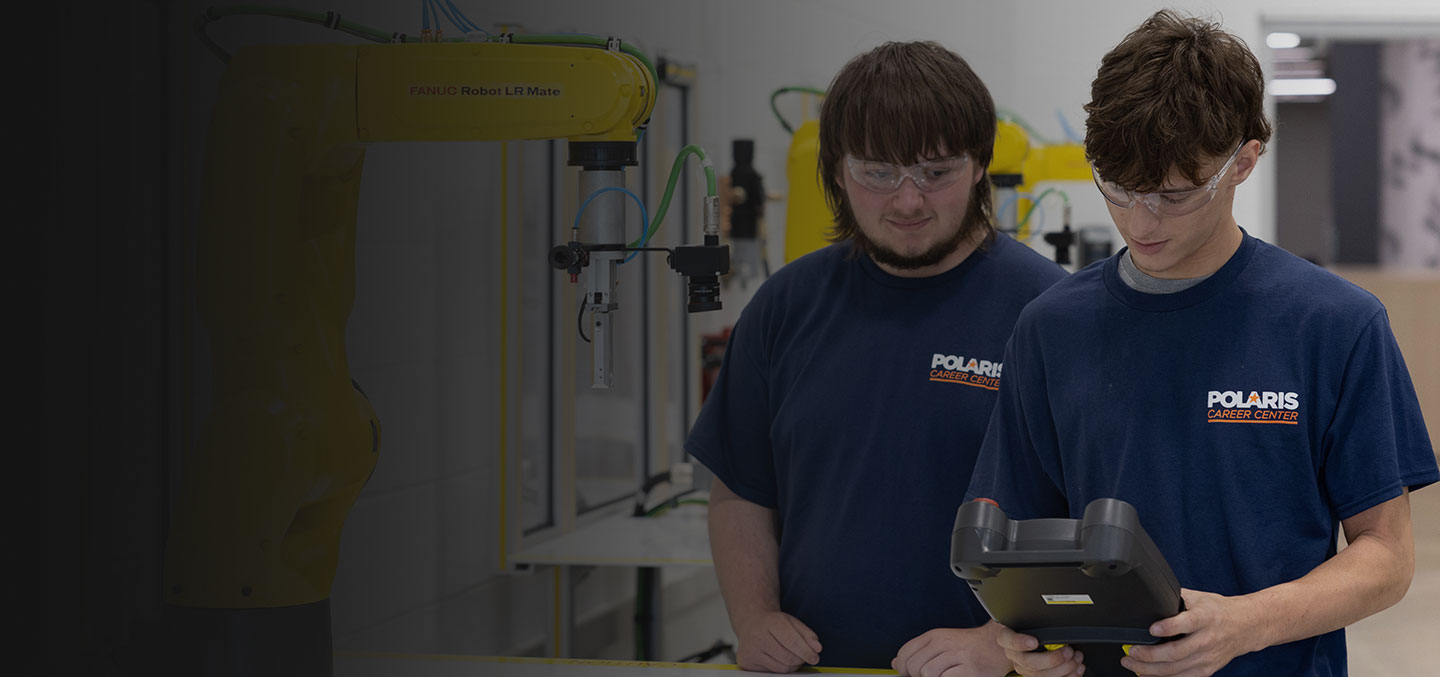
At SME FUSION, the Building the AI-Ready Manufacturing Workforce session explored how organizations must prepare technology and talent as one integrated strategy as artificial intelligence reshapes manufacturing skills, transforms employee responsibilities, and redefines workforce preparedness.
Read More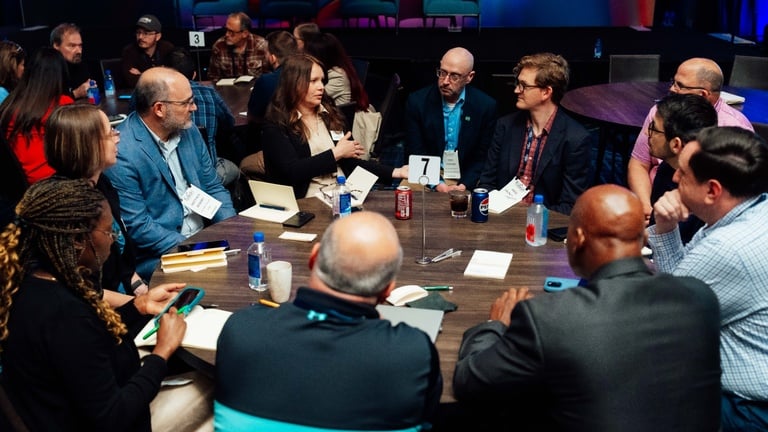

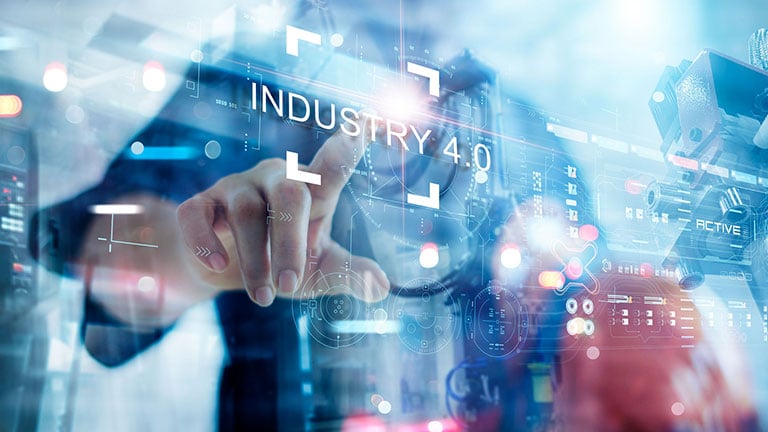
How can we develop strong front-line leaders without disrupting production? A recent session with Toyota Material Handling North America explored an approach combining training, advanced planning, continuous improvement, and follow-ups to help leaders apply new skills on the job.
Read More

At SME FUSION, the session Earn-and-Learn in Practice A Proven Model for Talent Development explored how Mckee Food Company partnered with local college to improve their talent pipeline.
Read More

Higher education institutions are playing an increasingly important role in addressing these challenges. Through partnerships with Tooling U-SME, universities are building programs that better align education with workforce needs while creating stronger pathways into manufacturing careers.
Read More
The pursuit of operational excellence is a journey, not a destination. For two decades, thousands of professionals and organizations have used the Lean Certification program as a guide on that path.
Read MorePolaris Career Center, the state of Ohio, manufacturers and education partners
create an industry-driven program to fill local jobs and jumpstart careers
This fall, 52 high school juniors and seniors from six Greater Cleveland school districts entered hands-on skill labs at Polaris Career Center designed to resemble the advanced manufacturing environments they could soon encounter at work.
Through the new Engineering Technology, Robotics & Automation (ERA) program, students will learn to design components, program robots, wire automation systems and integrate technologies using advanced industrial equipment from FANUC, Rockwell Automation and other manufacturers. They can also earn industry-recognized credentials and college credit while exploring pathways into employment and further education.
The program responds to a challenge Northeast Ohio manufacturers and educators had confronted for years: automation and other production technologies were advancing faster than the regional talent pipeline, leaving employers short of people skilled in robotics, mechatronics, CNC machining, additive manufacturing and connected systems.
Polaris, meanwhile, was experiencing growing demand and wait lists for career-technical education (CTE) programs but had reached the limits of its physical capacity.
The challenge was not only preparing students for today’s jobs but equipping them to adapt as manufacturing technology continues to change.
Polaris and partners answered by building the program with industry, not simply for it.
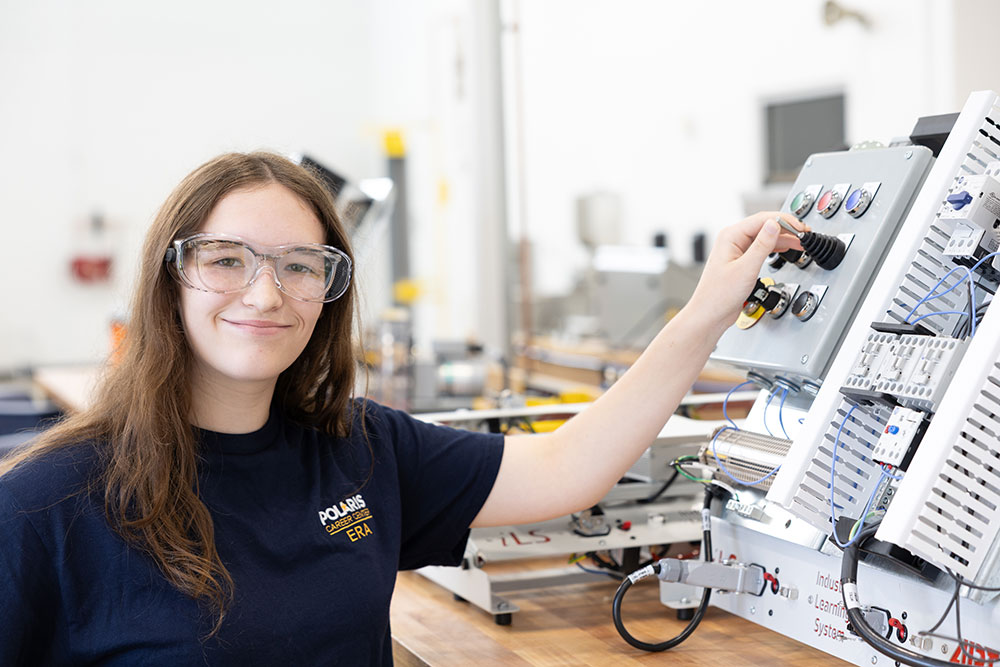
Polaris led the project and brought together the State of Ohio, Integrated Systems Technologies (IST), APT Manufacturing Solutions, Tooling U-SME, higher-education institutions and area employers.
Each partner supplied a different piece of a system that no organization could have built alone:
Polaris began laying the groundwork years before construction funding became available, studying workforce needs and building industry partnerships.
In spring 2023, Ohio made $200 million available for career-technical facility expansion and another $100 million for equipment and technology. Polaris had only several weeks to assemble its application.
In November 2023, Polaris was awarded an $11,648,720 CTE Construction Facilities Expansion Grant—one of 35 projects funded from 59 proposals statewide.
“For several years, Polaris worked closely with local manufacturers, APT/IST and other partners to understand workforce needs,” said Diane Xander, Superintendent, Polaris Career Center. “When state funding became available in 2023, that early groundwork allowed us to quickly rally our partners and demonstrate strong industry and community support.”
The grant supported a 26,608-square-foot advanced manufacturing expansion with hands-on skill labs and classroom space for the new ERA program. At full operation, the program is designed to prepare up to 144 students each year for careers in advanced manufacturing, robotics and STEM fields.
A critical decision was to give Polaris ERA Instructor Bonnie Romano two years to build the program before launch. She toured manufacturers and colleges, completed vendor training, tested equipment and collaborated with the partners who would support the labs.
Romano’s guidance helped Polaris avoid a common CTE problem: purchasing equipment first and asking a teacher to make the pieces cohere later.
“Polaris trusted me to make decisions and source equipment that was teachable, relevant to industry and able to lead to the outcomes we wanted for students,” said Romano. “Having that time and instructor input is very rare in education—and it is going to make a huge difference.”
One of the first companies Polaris approached was IST which helped turn the concept into an implementable plan.
Beginning in 2019, IST President Gabe McCready helped Polaris plan the three hands-on skill labs, develop equipment layouts and budgets, and demonstrate the center’s potential to state decision-makers. After the grant was awarded, IST helped install equipment, train instructors and prepare the program for students.
“We were alongside Polaris from the inception of the big idea through funding, building and implementation of the equipment, curriculum and credentials,” said Gabe McCready, President, IST. “It has been a heck of a journey.”
Another early partner was APT, a FANUC authorized system integrator (ASI).
“We build industrial equipment for the education market. We don't build education equipment,” said APT President Anthony R. Nighswander. “Students should learn on industrial built equipment the same way industry wants it.”
APT, FANUC, Rockwell and NOCTI also created the Industry Training Academy, giving Polaris instructors a central source for curriculum, certifications and equipment training.
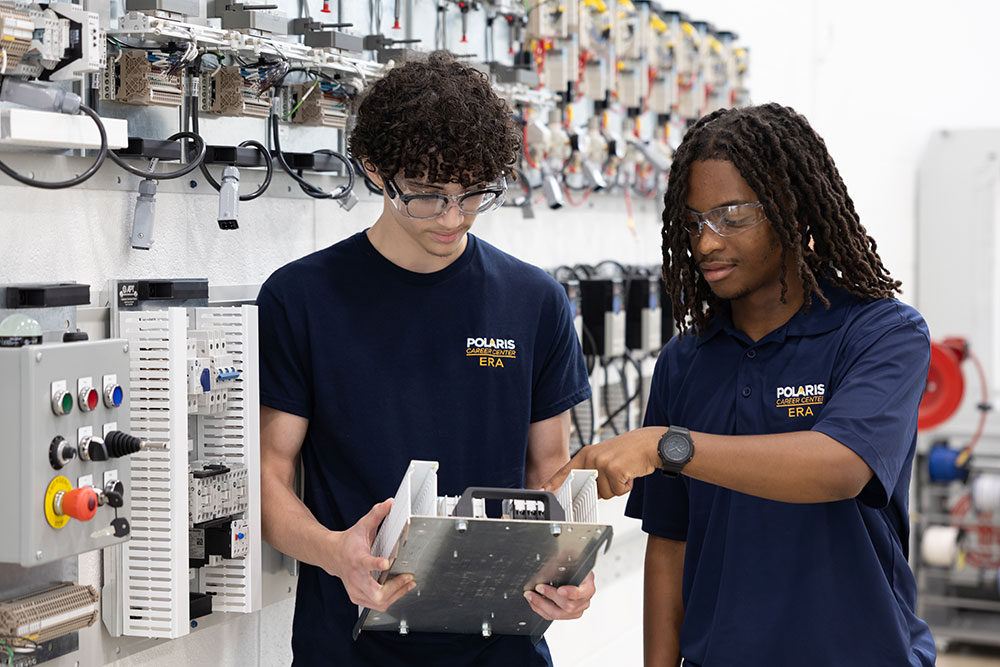
The ERA program integrates three disciplines rather than separating them. Students develop foundational skills in each area and then apply them in connected manufacturing systems:
Tooling U-SME mapped its courses to the four Ohio Department of Education and Workforce (ODEW) approved pathways included in the Polaris ERA curriculum: Automation Technologies, CNC Programming and Machining, Computer Aided Drafting and Modeling, and Industrial Robotics. To connect classroom learning with industry recognized skill development, the Tooling U-SME content is also aligned to credentials such as SME’s Certified Manufacturing Associate (CMfgA), Robotics Manufacturing Fundamentals, and new microcredentials integrated with APT labs and equipment.
“When we connect Tooling U-SME’s strong theory content through their online classes with real industrial hardware, students get the best of both worlds,” said McCready. “They learn what a safety circuit is, then walk over to a machine, read a schematic, wire that circuit and do what they will actually do in the workplace.”
Romano said, “As an educator, that coordinated system is exactly what I need.”
Industry certifications and Ohio college-credit pathways allow students to carry their learning into employment or postsecondary education. A partnership with Lorain County Community College provides one route for students to continue building their technical skills.
“Industry is playing an active role in getting these programs up and running, advising and participating in what we do,” said Romano. “That is the key to remaining competitive, being innovative and helping students see possibilities they did not know existed.”
FANUC, Rockwell Automation, DuPont and Swagelok helped build the vision for the program and continue to provide ongoing support, collaboration and feedback.
This collaboration means they will gain access to emerging talent familiar with the same kinds of robots, controls and integrated systems used in their facilities.
“When a hiring manager sees experience with FANUC robots or Rockwell controls—the systems running that plant floor—that student is valuable right away,” said McCready.
Romano added that while companies see the value and return from automation, they are spread thin and do not always have the resources to implement it. “Knowing our students will come out with these skills and can help them get systems up and running validates what we are doing.”
An employer advisory council keeps the program responsive as technologies and workforce needs change.
High school juniors and seniors spend three hours a day at Polaris, combining technical instruction with their academic work at their home high schools. They can also earn up to 19 credentials and microcredentials from FANUC, Rockwell, SME and other industry organizations.
“I could not be more excited about the energy,” said Romano after the first week of classes. “These kids are chomping at the bit to get on these robots, and the positive interaction between students coming from six different school districts is tremendous.”
The program gives students several options after graduation, including immediate employment, college or a combination of work and employer-supported education.
“This program will be a game changer for our students,” said Xander. “They will graduate with clear pathways to in-demand, well-paying careers in advanced manufacturing right out of high school.”
“Polaris is preparing its students for the careers that drive Ohio's economy, and there's no better way to prepare them than to teach them on the same equipment being used by Ohio businesses today,” said Ohio Lt. Governor Jim Tressel in a May 2026 news release announcing the advanced manufacturing expansion at Polaris. "We want our students to build successful futures right here in Ohio, and programs like this are making that possible.”
Xander agreed, “By connecting students directly to in-demand career opportunities, we can help employers address critical workforce needs, keep talent in our region and support Northeast Ohio’s long-term economic growth and competitiveness.”
The first 52 students represent the beginning. Their progress through credentials, work-based learning, employment and postsecondary education will help Polaris and partners refine the program for future classes.
The broader lesson is that industry collaboration plus public investment can accomplish what no one organization could do alone: build a workforce prepared for technological change while creating stronger career paths and communities.
“We’re building industry. We’re building our workforce. We’re building community,” Romano said. “It’s a snowball effect.”
The ERA project offers a practical blueprint for states and CTE systems seeking to build a strong industry-driven talent pipeline: