Be a Blog Subscriber
Join thousands of manufacturing leaders and professionals who get the Accelerate blog delivered straight to their inbox


Join thousands of manufacturing leaders and professionals who get the Accelerate blog delivered straight to their inbox

Tooling U-SME helps workers’ compensation insurance providers train sales and underwriting teams to understand manufacturing operations, support safer client practices, and improve long-term insurance outcomes.
Read More

Tariffs are reshaping where manufacturers produce, invest, and build talent. As reshoring accelerates, companies need agile workforce strategies, automation-ready skills, and scalable training to support domestic growth and evolving workforce needs through 2027.
Read More
Leaders from the Charles L. Shor Foundation, Ludlow High School, and the Northern Kentucky Chamber of Commerce shared how philanthropic investment and employer engagement are creating a stronger, better-prepared candidate pipeline through an SME PRIME program in Northern Kentucky at SME FUSION.
Read More

At SME FUSION, the Building the AI-Ready Manufacturing Workforce session explored how organizations must prepare technology and talent as one integrated strategy as artificial intelligence reshapes manufacturing skills, transforms employee responsibilities, and redefines workforce preparedness.
Read More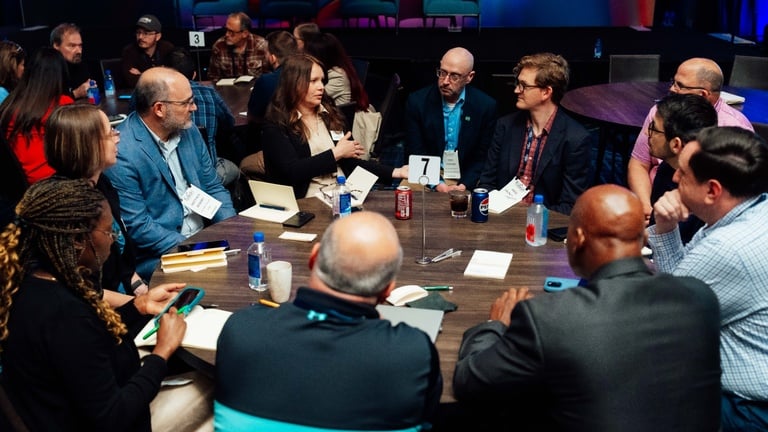
How can we develop strong front-line leaders without disrupting production? A recent session with Toyota Material Handling North America explored an approach combining training, advanced planning, continuous improvement, and follow-ups to help leaders apply new skills on the job.
Read MoreOhio’s manufacturing industry is a cornerstone of the state’s economy, employing more than 680,000 people. But as manufacturers face evolving technologies, changing skill requirements, and persistent workforce shortages, building a strong talent pipeline requires more than individual employers recruiting and training workers independently. It takes a coordinated strategy that connects industry, education, government, and workforce organizations around shared goals.
At SME FUSION, industry and workforce development leaders explored Ohio’s approach to addressing these challenges through a statewide manufacturing workforce blueprint. Representatives from the Ohio Manufacturers Association (OMA), Lorain County Community College, Ohio TechNet, JobsOhio, and the Central Ohio Manufacturing Partnership shared how collaboration, industry-led training, and stronger career pathways are helping to align workforce development with manufacturers’ needs.
Ohio manufacturers face significant demand for skilled workers, particularly in technical roles. While employers need qualified talent to keep pace with production demands and technological advancements, the number of workers completing relevant training programs falls short of industry needs.
Estimates shared at SME FUSION highlighted the scale of the challenge. Ohio has approximately 15,000 unique technician job openings annually, yet produces fewer than 3,000 graduates for these roles. Closing this gap requires a more coordinated approach to recruiting, preparing, and retaining manufacturing talent.
The challenge extends beyond training capacity. Many students and job seekers lack firsthand exposure to manufacturing careers, and misconceptions about the industry can limit interest in opportunities that offer meaningful work and long-term career growth.
Research shared through Ohio’s workforce efforts found that 70% of high school students, 76% of parents, and 73% of the emerging workforce viewed technician careers positively. However, awareness does not always translate into experience or action. More than a third of emerging workers surveyed had no manufacturing experience through school, underscoring the need to connect career awareness with practical learning opportunities.
Ohio’s approach focuses on aligning stakeholders and resources around a shared vision for manufacturing workforce development. The blueprint emphasizes five interconnected priorities:
A statewide strategy provides a framework, but progress depends on translating shared priorities into practical action. Employers, educators, and workforce partners each play a role in identifying skill gaps, creating relevant learning experiences, and connecting people with opportunities.
Industry sector partnerships help make this coordination possible by bringing stakeholders together around regional needs rather than relying on disconnected programs. When employers communicate the skills they need, and education providers align curricula accordingly, training can become more relevant to the workplace and more responsive to changing demand.
Career awareness is equally important. With many students making decisions about their futures before high school, early engagement can help them understand the variety of opportunities available in modern manufacturing. Hands-on experiences, employer connections, and clear pathways from education to employment can make those careers more visible and accessible.
At the same time, programs for incumbent workers enable manufacturers to develop existing talent rather than relying solely on external recruitment. By connecting foundational competencies with technical training and advancement opportunities, employers can strengthen their workforce while creating more opportunities for employees.
Ohio’s manufacturing workforce strategy demonstrates the value of treating talent development as a shared responsibility. By connecting employers, education providers, workforce organizations, and government partners, the state is working to build a more coordinated system that responds to industry needs and expands access to meaningful careers.
The discussions at SME FUSION reinforced an important takeaway: addressing manufacturing’s workforce challenges requires more than filling immediate vacancies. It requires sustained collaboration, early career awareness, industry-aligned training, and opportunities for workers to continue developing their skills.
As manufacturers navigate ongoing changes in technology and production, these partnerships will remain essential to building a skilled, adaptable workforce, and supporting the long-term strength of Ohio’s manufacturing industry.